
 |
 |
Why Botox and Fillers in Older Adults Require a More Tailored Approach
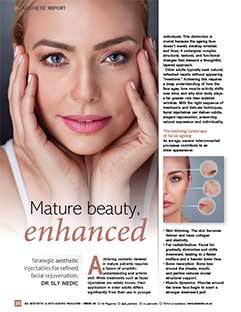
Facial rejuvenation later in life is both an art and a science. Although treatments such as Botox and dermal fillers are widely known, the way they should be used in older adults is very different from the way they are used in younger individuals. This is because the face doesn’t simply develop wrinkles and lines — it undergoes structural, textural, and functional changes that require a more thoughtful, layered approach.
Older adults often seek natural, refreshed results without looking “overdone.” Achieving this requires understanding how the face ages, how muscle activity shifts over time, and why skin laxity plays a much bigger role than isolated wrinkles. With the right sequence of treatments and a more delicate technique, Botox and fillers can deliver subtle, elegant rejuvenation while preserving natural expression and individuality.
A Changing Landscape: How the Face Ages Differently With Time
As we age, several processes occur at the same time and contribute to an older appearance and here is simplified explanation :
• The skin becomes thinner and loses collagen and elasticity.
• Facial fat gradually shrinks and moves downward, making the midface flatter and the lower face heavier.
• Bone resorption around the cheeks, mouth, and jawline reduces structural support.
• Muscles around the lower face begin to pull downward more strongly.
• The lips thin, lose definition, and develop fine lines around the mouth.
These changes mean that treatment should never be a “copy-paste” version of what works for younger faces. The goals also shift — it becomes less about only erasing wrinkles and more about restoring support, volume, improving skin collagen and elasticity, and harmonising the overall facial expression.
Botox: Not Just for the Forehead
Botox is often associated with smoothing the forehead or softening crow’s feet, but in older adults, its role is much broader. With age, certain muscles in the lower face pull down more than they lift. This contributes to a tired or sad expression, even when the person feels well.
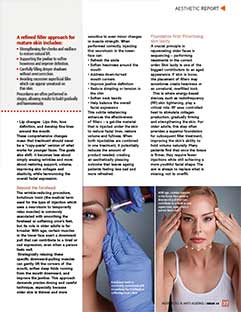
Strategically relaxing specific downward-pulling muscles can gently lift the corners of the mouth, soften deep folds running from the mouth downward, and improve the jawline. This approach requires precise dosing and careful technique, particularly because older skin is thinner and more sensitive to even small changes in muscle strength. When performed correctly, lower-face Botox can: refresh the smile, soften heaviness around the mouth and remove downturn mouth, improve jawline definition, reduce dimpling or tension in the chin, soften the neck bands and help balance the overall expression. This subtle rebalancing can possibly make fillers more effective and reduce the amount of product needed, but definitely create aesthetically pleasant outcome. Aging patients feel less sad and more refreshed.
 |
Why Treating Skin Laxity First Makes Such a Difference
One of the most important principles in rejuvenating older faces is sequencing — doing treatments in the correct order. Skin laxity is one of the biggest contributors to an aged appearance. If skin is loose, placing fillers into it can sometimes create heaviness or an unnatural look.
This is where energy based devices such as radiofrequency (RF) skin tightening plays a critical role. RF uses controlled heat to stimulate collagen production, gradually firming and strengthening the skin. For older adults, this step often creates a far better foundation for later filler treatment and improve the skin’s ability to hold volume naturally. Many patients notice that once the tissue is firmer, they need fewer injections and still achieve a more youthful facial shape. The aim is always to replace what is missing and not to try overfill the face.
Fillers: Structural Support, Not Overfilling
In older patients, filler treatment must be approached with a focus on rebuilding support rather than adding bulk. Because bone and deep fat diminish with age, placing fillers closer to the foundational structures often produces the most natural and long-lasting improvements.
A refined filler approach includes:
• Strengthening the cheeks and midface to restore natural lift
• Supporting the jawline to soften heaviness
• Carefully filling deeper shadows without overcorrecting
• Avoiding excessive superficial filler, which can look unnatural on thin skin
Treatments are often performed in stages so the results build gradually and harmoniously.
The Mouth and Lips: Where Aging Shows First
The mouth area often ages faster and more dramatically than other parts of the face. Fine lines above the lips, thinning of the lip body, loss of lip definition, and downturned corners are all common concerns. Simply “filling the lips” is rarely the right solution for older adults.
A natural, sophisticated approach may combine:
• Gentle RF or resurfacing to improve skin texture
• Subtle enhancement of the lip border
• Small amounts of filler to restore shape, not size
• Support around the corners of the mouth
• Light Botox in selected areas to reduce downward pull
This method softens lines, restores definition, and refreshes the smile without creating heaviness or an artificial look.
Safety and Planning: The Importance of a Step-by-Step Approach
Older adults may be more prone to bruising, swelling, or slower healing due to medications or skin fragility. A planned, structured approach helps ensure comfort and safety while achieving refined aesthetic outcomes.
A typical rejuvenation plan might include:
1. Improving skin firmness with RF
2. Rebalancing facial expression with strategic lower-face Botox
3. Restoring deep support with carefully placed fillers
4. Refining the mouth and lips with subtle enhancements
5. Maintaining results with periodic touch-ups
This method avoids overcorrection and builds results that look natural and age-appropriate.
Conclusion
Botox and fillers can be incredibly effective tools for rejuvenation in older adults — but they must be used differently. By addressing skin laxity first, using Botox strategically in the lower face, and applying fillers for structural support rather than volume, clinicians can achieve results that are elegant, soft, and natural.
This tailored, narrative-based approach respects the unique beauty of the aging face while enhancing confidence and expression.
Written by Dr Sly Nedic , MD IFMCP and aesthetic practitioner